Root Canal Treatment
Gentle Root Canal Therapy That Relieves Pain & Saves Your Smile in Woodstock, GA
Root canals have an undeserved reputation. At Dentistry of Olde Towne, modern techniques and thorough anesthesia make this a comfortable, routine procedure — often no more involved than getting a filling. More importantly, it’s one of the most effective ways to relieve severe tooth pain and save a natural tooth that might otherwise be lost. Proudly serving Woodstock and Cherokee County families since 1984.
What Is Root Canal Therapy?
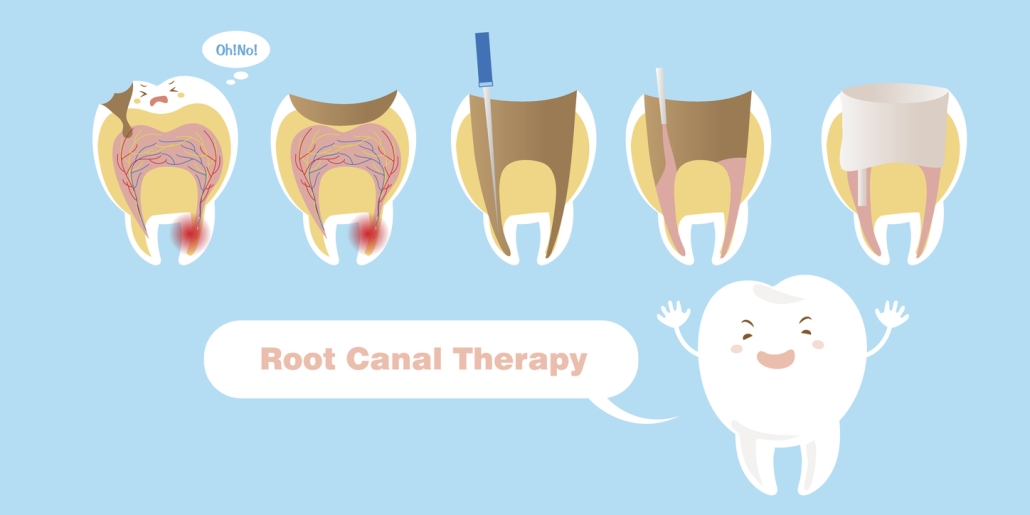
Root canal therapy — also called endodontic treatment — is a procedure designed to remove infected or inflamed tissue from inside a tooth. Each tooth contains a soft inner core called the pulp, which houses nerves and blood vessels. When the pulp becomes infected due to deep decay, a crack, or trauma, it causes significant pain and can lead to serious oral and systemic health problems if left untreated.
By cleaning, disinfecting, and sealing the inside of the tooth, root canal therapy eliminates the infection, relieves pain, and allows you to keep your natural tooth for years to come.
Signs You May Need a Root Canal
Our Woodstock patients often come to us with one or more of the following symptoms:
- Persistent, severe toothache — especially when chewing or applying pressure
- Prolonged sensitivity to hot or cold temperatures even after the source is removed
- Darkening or discoloration of the tooth
- Swollen, tender, or inflamed gums near the affected tooth
- A persistent pimple-like bump on the gums (dental abscess)
- A tooth that has suffered trauma, even without visible damage
If you are experiencing any of these symptoms in the Woodstock area, do not wait. Early treatment greatly improves outcomes.

What to Expect During Root Canal Treatment
Root canal therapy at our Woodstock dental office typically takes one to two appointments, depending on the complexity of the case:
Step 1 — Diagnosis & Anesthesia: We take digital X-rays, sometimes utilizing 3D Imaging, to assess the extent of infection and thoroughly numb the area. Most patients are surprised by how comfortable the procedure is once anesthesia takes effect.
Step 2 — Pulp Removal: A small opening is made in the crown of the tooth. Using precise, specialized instruments, the infected pulp tissue is carefully removed from the root canals.
Step 3 — Cleaning & Shaping: The canals are cleaned, shaped, and disinfected to eliminate all traces of infection.
Step 4 — Sealing: The canals are filled and sealed with a biocompatible material called gutta-percha to prevent reinfection.
Step 5 — Restoration: In most cases, a tooth that has undergone root canal therapy will need a crown to restore its strength and function. We will coordinate this as part of your treatment plan.
A Note on Root Canal Myths
Many patients delay treatment out of fear based on outdated ideas about root canals. The reality is that today’s root canal therapy is performed with advanced techniques and effective anesthesia — most patients report that the procedure itself is far less uncomfortable than the pain that prompted them to seek treatment. We serve patients from Woodstock, Canton, Holly Springs, Towne Lake, and across Cherokee County.