
Comfortable, Mess-Free Digital Dental Impressions in Woodstock, GA
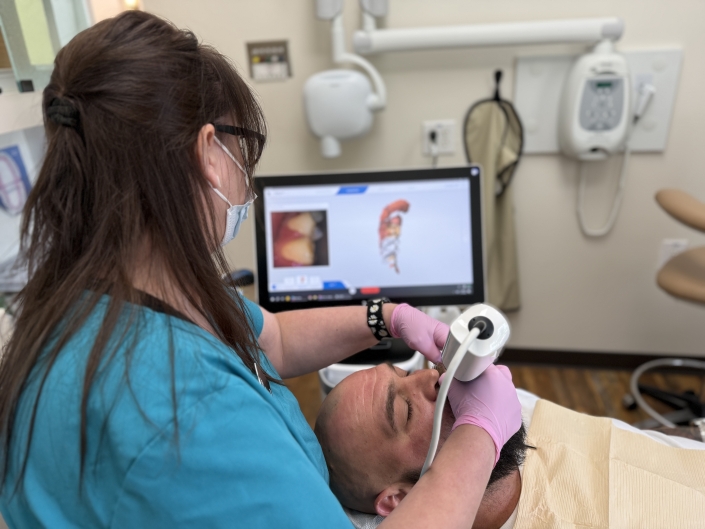
If the memory of a gooey, uncomfortable traditional dental impression has ever made you dread a dental procedure, we have great news. At Dentistry of Olde Towne, we use state-of-the-art digital scanning technology anytime we can to capture precise, three-dimensional impressions of your teeth and bite — with no messy putty, no gagging, and no waiting. Just a small, comfortable wand that glides along your teeth and delivers stunning digital accuracy in minutes. Serving patients throughout Woodstock and Cherokee County since 1984.
What Is a Digital Dental Scanner?
A digital dental scanner — also called an intraoral scanner — is a small, handheld device that uses advanced optical technology to capture thousands of images per second as it moves along the surfaces of your teeth and gums. These images are instantly stitched together by sophisticated software to create a precise, full-color, three-dimensional digital model of your mouth.
This digital model replaces the traditional physical impression — the process of filling a tray with thick, goopy impression material and holding it in your mouth for several uncomfortable minutes while it sets. The digital scan achieves the same goal in far less time, with far greater comfort, and often with even greater accuracy.
What Is Digital Scanning Used For?
At our Woodstock dental office, digital impressions play a role in a wide range of treatments and restorations, including:
- Dental crowns and bridges — Digital scans provide the precise tooth geometry needed to fabricate crowns and bridges that fit beautifully and require minimal adjustment
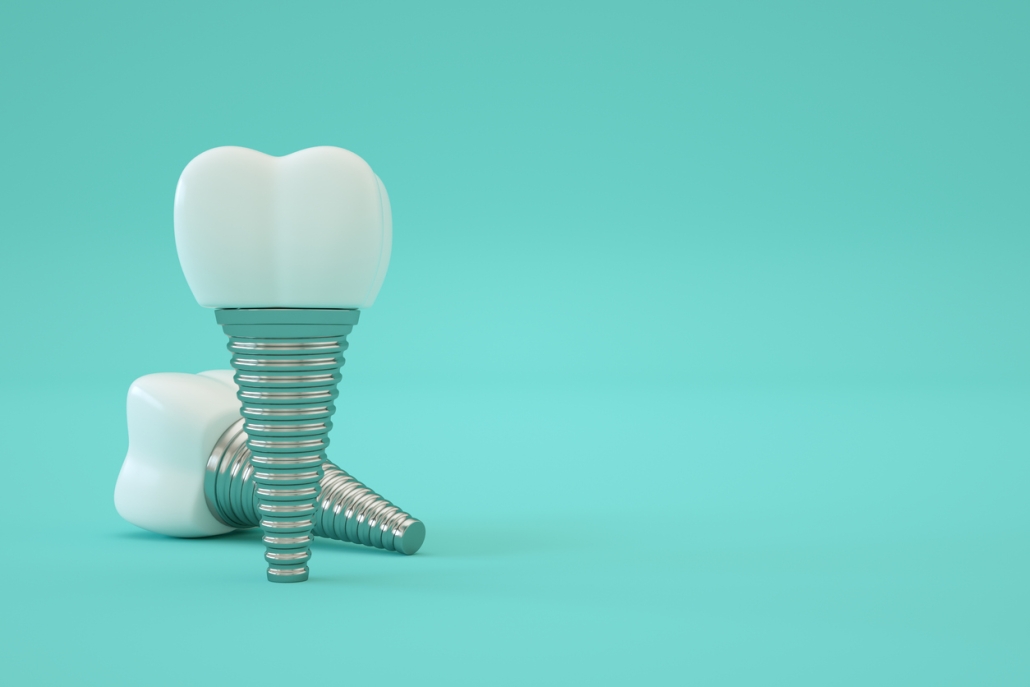
- Dental implant restorations — Accurate scanning of the implant site and surrounding teeth ensures the implant crown seats perfectly and integrates naturally with your bite
- Dental veneers — Digital models allow our lab to design and fabricate veneers with exceptional precision for a seamless cosmetic result
- Nightguards and occlusal splints — Custom-fitted TMJ appliances and nightguards are fabricated from digital scans for superior fit and comfort compared to traditional impression-based appliances
- Oral appliances for sleep apnea — Custom sleep appliances require highly accurate models of your upper and lower teeth to function effectively and comfortably
- Orthodontic records and monitoring — Digital scans create a precise baseline record of tooth positions and can be used to monitor progress throughout orthodontic treatment
- Partial and full dentures — Digital workflows allow for more precise denture fabrication and improved fit
- Smile design and treatment planning — Digital models can be used to digitally simulate treatment outcomes, allowing patients to visualize proposed cosmetic results before treatment begins
Digital Impressions vs. Traditional Putty Impressions
Traditional dental impressions have served dentistry well for decades, but digital scanning represents a meaningful advance in comfort, speed, and accuracy. Here is how they compare:
- Comfort — Digital scanning is entirely comfortable with no gagging, no taste, and no prolonged mouth-opening. Traditional impressions are notorious for triggering the gag reflex and causing jaw fatigue
- Speed — A digital scan takes five to ten minutes. Traditional impressions take longer when factoring in tray selection, material mixing, setting time, and removal
- Accuracy — Digital scans are not subject to the distortion that can occur with physical impression materials during setting, removal, or shipping. The result is often a more precise fit for crowns, appliances, and other restorations
- Patient experience — Patients with a strong gag reflex, dental anxiety, or small mouths find digital scanning dramatically more comfortable than traditional methods
- Communication — Digital models can be shared instantly with our laboratory partners and, when appropriate, with specialist colleagues — improving communication and treatment coordination for our Woodstock patients
Does digital scanning replace dental X-rays?
No — digital scanning and dental X-rays serve different and complementary purposes. An intraoral scanner captures the three-dimensional shape and surface detail of your visible teeth and soft tissue — the information needed to fabricate crowns, appliances, and other restorations. Dental X-rays capture what is happening inside and below the tooth and beneath the gumline — decay between teeth, bone levels, root structure, and pathology that cannot be seen on the surface. Both technologies are important parts of comprehensive dental care at our Woodstock office, and they work together to give our team the most complete picture of your oral health.
Is digital scanning covered by dental insurance?
Digital scanning is typically covered by dental insurance in the same way that traditional impressions are covered — as part of the procedure for which the impression is taken. For example, if your insurance covers a crown, it covers the impression needed to fabricate that crown, whether that impression is taken digitally or with traditional putty. The scanner is simply the method we use to capture that information. If you have specific questions about your coverage, our Woodstock insurance coordinator Ashley will be happy to verify your benefits before your appointment.
Is the digital scanner safe? Does it emit radiation?
The intraoral scanner emits no radiation whatsoever. It uses safe optical light technology — similar to a camera — to capture images of the surfaces of your teeth. It is completely safe for patients of all ages, including children, pregnant women, and patients who are sensitive to radiation. This is one of the many advantages of digital scanning over traditional radiographic imaging for impression-taking purposes.
My dentist used to take impressions with putty. Why is digital scanning better?
Traditional putty impressions have been the standard of care in dentistry for many decades and have served patients well. However, digital scanning offers meaningful advantages in comfort, speed, and precision that benefit both our patients and the quality of the restorations we deliver. Patients with a strong gag reflex, dental anxiety, or difficulty keeping their mouth open for extended periods find digital scanning dramatically more comfortable. The digital data is also not subject to the distortion that can occur with physical impression materials — meaning crowns, bridges, and appliances often require fewer adjustments when fabricated from digital scans. At Dentistry of Olde Towne, we have invested in this technology because we believe our Woodstock patients deserve the most comfortable and accurate care available.
How accurate is a digital dental scan compared to a traditional impression?
Digital scanning is highly accurate — in many clinical studies, intraoral scans have been shown to be as accurate as or more accurate than traditional impressions for most restorative applications. Physical impression materials can introduce distortion during the setting process, when the tray is removed from the mouth, and during shipping to the dental laboratory. Digital scans eliminate all of these potential sources of error — the data captured is transmitted electronically to the lab in exactly the form it was recorded, with no physical handling involved. The result is restorations that fit precisely and require minimal chairside adjustment at our Woodstock dental office